What is UGC?
UGC stands for user-generated content: photos, videos, reviews, posts and testimonials made by ordinary people rather than by a brand or its agency. A customer's unboxing video, a five-star review with a photo, a TikTok of someone using a product in their kitchen: all UGC.
In marketing the term now covers two things. Organic UGC is what customers post on their own, which a brand can reshare with permission. Paid UGC is content a brand commissions from a UGC creator to look like a customer's post, then runs on its own pages and ads. What makes either one UGC is the look and the voice of a real person using the product, not a polished studio shot; that is why it reads as more trustworthy than brand creative. AI UGC is a third, newer kind: the same phone-camera style generated by AI instead of filmed.
What does UGC stand for?
UGC stands for user-generated content. In social media and marketing it means content made by users and customers rather than the brand. In gaming (Roblox, Minecraft, Fortnite) the same letters mean items and worlds made by players, which is why "UGC" searches mix the two; this page is about the marketing meaning.
Types of UGC, with examples
| Type | Example | Where brands use it |
|---|---|---|
| Reviews and ratings | A five-star review with a photo of the product at home | Product pages, marketplace listings, Google Shopping |
| Unboxing videos | Opening the parcel and the first reaction to the product | TikTok, Reels, launch ads |
| Tutorials and demos | How to apply, assemble or use the product, filmed on a phone | Product pages, YouTube Shorts, ads |
| Testimonials | A customer saying on camera what changed after using it | Landing pages, retargeting ads (real customers only) |
| Social posts | A tagged Instagram photo or a TikTok with the brand's hashtag | Brand feeds, email, shoppable galleries |
| Before and after | The same room, skin or car before and after the product | Ads and product pages, where the result is real |
| Paid creator UGC | A UGC creator's 30-second hook, demo and call to action | Paid social on Meta and TikTok, run from the brand's account |
| AI UGC | An AI person holding the real product in a phone-camera style | Ad testing, lifestyle product photos, catalog shots |
Organic UGC vs paid UGC vs AI UGC
| Organic UGC | Paid UGC | AI UGC | |
|---|---|---|---|
| Who makes it | Customers, on their own | A hired UGC creator, to a brief | An AI model, directed by the brand |
| Cost | Free, plus permission | Per asset: creator fee, shipping, usage rights | A subscription or model usage |
| Speed | Unpredictable | Days to weeks per batch | Minutes |
| Volume | Whatever customers post | Limited by budget | As many variations as you test |
| What it can prove | That a real customer used it | That a real person used it | Nothing about real use: label it |
Most brands that run paid social use all three: organic UGC for proof on product pages, paid creators for hero videos and testimonials, and AI UGC for the volume of hooks and scenes that testing needs.
How brands get UGC
- Ask customers: post-purchase emails asking for a photo review, a branded hashtag, or a prize for the best video. Always ask permission before reusing a post, and keep the reply.
- Hire UGC creators: through marketplaces such as Billo, Insense or JoinBrands, an agency, or direct outreach; see UGC creator for what they charge and how usage rights work.
- Generate it: AI UGC tools place your real product in creator-style photos and videos with a consistent AI person, for testing many angles before paying for a shoot.
UGC rights and disclosure
- A customer owns what they post. Reusing it on your site or in ads needs their permission, ideally in writing, and paid ads usually need explicit usage rights.
- Paid creators must disclose the relationship when they post on their own accounts (the FTC's endorsement guides in the US, and each platform's branded-content tools).
- AI UGC must not pose as a real customer's experience: no fake reviews or testimonials. Label realistic AI content where Meta, TikTok and YouTube ask you to.
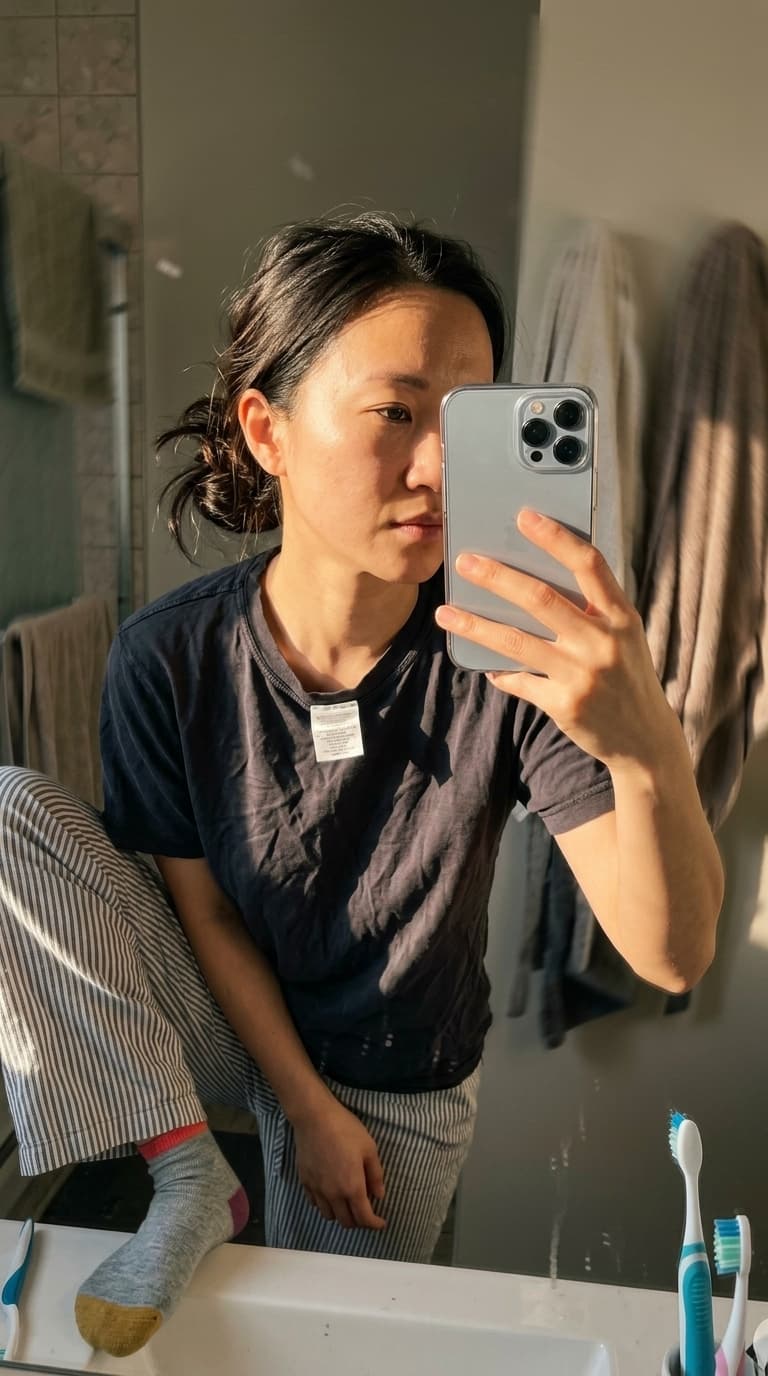
Phone-camera UGC looks
Mirror and arm's-length selfies by four AI Experts: the shot people take of themselves.



AI UGC: one product, many scenes
One AI Expert and one real product, placed in different scenes by ppl.studio. Same face, same product, every shot.




Put it to work
- Product UGC photos — creator-style photos of your real product, with one consistent AI person.
- Creator UGC video — a product URL in, a talking UGC-style video out.
- Viral video formats — the UGC formats working on TikTok, Reels and Shorts right now.
How it relates to AI UGC
AI UGC tools like ppl.studio make the paid-UGC look without the per-asset creator cost: you upload your product, pick an AI Expert, and get creator-style photos and videos with the same face across every shot. Use it for the testing volume; keep real customers for reviews and testimonials, which AI can't honestly provide.