How a Beauty Brand Created 900+ Lifestyle Photos with AI UGC
From $8,000/month in studio photography and influencer partnerships to under $100/month with AI UGC—while achieving true diversity across 12 skin tones for every single product.
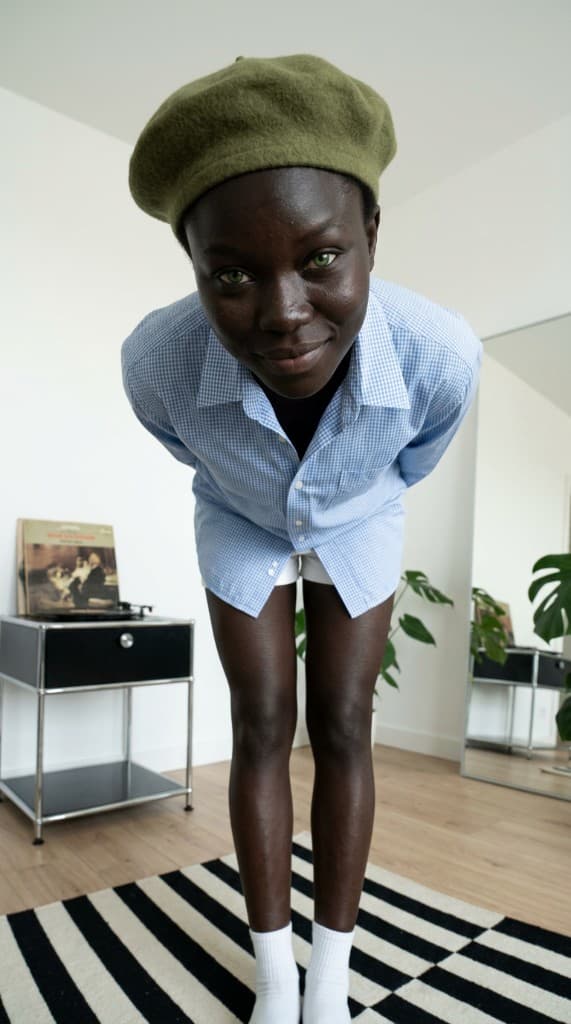
900+
Photos generated
93%
Cost cut
12
Skin tones
3 weeks
Total turnaround
The Challenge
A direct-to-consumer beauty and cosmetics brand with 50+ active SKUs—spanning foundations, concealers, lip products, skincare serums, and eye palettes—was spending $8,000/month on content production. Their workflow was common for the category but painfully inefficient:
- Monthly studio shoots with professional photographers, makeup artists, and 3–4 models per session, costing $4,000–6,000 per shoot. Each session produced 40–60 usable images covering only 8–10 SKUs.
- Influencer and UGC creator partnerships with 8–12 creators at $200–400 per deliverable. Turnaround ranged from 2–6 weeks, and roughly 40% of submissions required reshoots due to inconsistent lighting, framing, or brand consistency issues.
- Severe representation gaps. The brand marketed itself as inclusive with 24 foundation shades, yet their lifestyle imagery featured only 3–4 skin tones. Budget constraints meant they could only book a limited number of models per shoot. Products formulated for deeper skin tones had no lifestyle content at all—just swatch photos on white backgrounds.
- SKU coverage was thin. Only 15 of 50+ SKUs had lifestyle imagery. New product launches waited 4–6 weeks for their first lifestyle photos, missing the critical launch window when organic reach peaks.
The brand's CMO put it simply: they were selling an inclusive beauty line with marketing that looked anything but inclusive. The cost of booking diverse models for every product, in every shade, across multiple content formats was estimated at $25,000+ per month—more than triple their existing budget.
The Approach
The brand's content lead signed up for ppl.studio and built a systematic workflow designed around diversity-first content at scale:
1. Created a diverse expert roster
Built 12 AI experts spanning the full range of their customer base: different ages (20s through 50s), skin tones (from porcelain to deep ebony), hair textures, and personal styles. Each expert was designed to represent a real customer persona from their buyer data—a college student experimenting with bold lip colors, a 30-something professional building a minimalist routine, a mature skincare enthusiast focused on anti-aging serums, and so on.
2. Uploaded the full product catalog
Added all 50+ SKUs to the props library—foundation bottles, concealer tubes, lip products, eye palettes, skincare serums, and sets. Used existing product photos from their e-commerce store. For shade-specific products like foundations, they uploaded the packaging once and let the AI expert's skin tone communicate the shade match visually.
3. Generated photos in scene-based batches
Organized generation sessions by content type and setting:
- Morning routine — Expert at bathroom vanity applying skincare, serums, and foundation. Natural morning light.
- Get-ready-with-me — Close-up application shots, mirror selfies, product flat-lays on marble countertops.
- On-the-go — Expert touching up lip product in a car mirror, at a cafe, or before an event.
- Golden hour portraits — Outdoor lifestyle shots with soft lighting showing products on skin in natural conditions.
- Night out — Expert with glam makeup look showcasing eye palettes and bold lip colors in evening settings.
- Shelfie and flat-lay — Product arrangement shots styled in bathroom shelves, travel bags, and vanity setups.
Each of the 50 SKUs was photographed across 3–4 scenes with 4–6 different experts, producing 12–18 lifestyle variations per product. Products sold in multiple shades got additional coverage with skin-tone-matched experts.
4. Built carousel and tutorial content
Used storyboards to create multi-frame Instagram carousel content: step-by-step application tutorials, before/after skincare routines, and “3 looks with one palette” series. Each carousel featured a single expert for visual consistency across slides. Top performers were extended to talking-head videos using Animate for TikTok and Reels.
The Results
| Metric | Before ppl.studio | After ppl.studio |
|---|---|---|
| Monthly content cost | $8,000 | ~$100 |
| Skin tones represented | 3–4 | 12 |
| SKUs with lifestyle imagery | 15 of 50+ | 50+ of 50+ (100%) |
| Lifestyle photos produced | 40–60/month | 900+ in 3 weeks |
| New product launch content lead time | 4–6 weeks | Same day |
| Ad creative testing volume | 15–20 variations/month | 100+ |
| Instagram engagement rate | 2.1% | 3.8% (+81%) |
Key Takeaways
- Diversity became a content advantage, not a budget constraint. Before ppl.studio, representing 12 skin tones meant booking 12 models—financially impossible for a mid-stage DTC brand. With AI experts, each shade in the product line now has corresponding lifestyle imagery featuring someone who looks like the customer buying it. The content team reported that social comments about “finally seeing someone who looks like me” increased measurably.
- Product photography for launches became instant. New SKUs previously waited 4–6 weeks for lifestyle content while the team scheduled shoots and coordinated creators. Now, on launch day, the product image is uploaded to the props library and 20–30 lifestyle photos across multiple experts and scenes are generated in an afternoon. The brand started promoting new launches on day one instead of day 30.
- Brand consistency improved dramatically. With UGC creators, every photo had a different aesthetic—different lighting, color grading, backgrounds, and composition styles. With AI experts, the brand controlled the look and feel of every image. Their Instagram grid went from visually chaotic to cohesive, and their ad creative maintained a unified brand identity across hundreds of variations.
- Content at scale unlocked real creative testing. Going from 15–20 ad variations per month to 100+ meant the team could test different experts, scenes, compositions, and messaging approaches simultaneously. They discovered that close-up application shots with natural lighting outperformed studio-style portraits by 2.4x—an insight that only emerged because they had the volume to test at scale.
Make your beauty brand truly inclusive
Upload your products, create AI experts across every skin tone and demographic, and generate lifestyle photos that represent your entire customer base—in hours, not months.
Start free with ppl.studio10 free photos · no credit card required
Founder of ppl.studio. Building AI tools for product marketing teams who need visual content at scale without the production overhead.